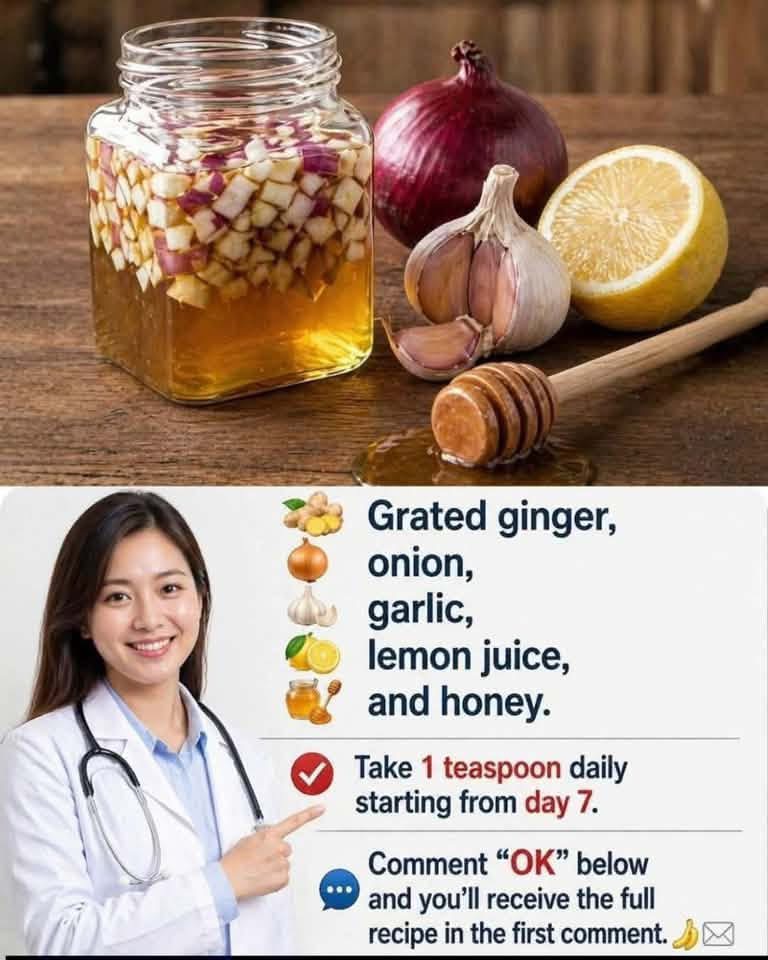
Ingredients
This recipe makes approximately one small jar, depending on the size of the ingredients.
What You Will Need
- 2 tablespoons freshly grated ginger
- 2 tablespoons finely chopped onion, preferably red or yellow
- 2 garlic cloves, peeled and finely crushed
- 2 tablespoons freshly squeezed lemon juice
- 1/2 cup honey
You can adjust the proportions slightly according to your taste. More ginger creates a stronger, spicier flavor, while additional lemon juice gives the mixture a sharper citrus taste.
Honey provides sweetness and helps combine the ingredients into a thick, spoonable mixture. Use ordinary food-grade honey, and avoid adding water unless you are preparing a separate drink immediately before consumption.
Equipment Needed
You will need:
- A clean glass jar with a lid
- A small cutting board
- A sharp knife
- A grater
- A spoon
- A small bowl for mixing
Make sure your equipment is clean and dry before beginning.
Instructions
Step 1: Prepare the Ginger
Wash the fresh ginger root thoroughly under running water. Peel it if desired, then grate it finely using a clean grater.
Fresh ginger provides a warm, spicy flavor and contains naturally occurring compounds called gingerols. Ginger has been studied for several potential health effects, particularly its role in relieving certain types of nausea.
For this recipe, approximately two tablespoons of freshly grated ginger are sufficient. Avoid using ginger that has become moldy, excessively soft, or unpleasant-smelling.
Step 2: Chop the Onion
Peel the onion and cut it into very small pieces. Red onions provide a colorful appearance and a slightly sharp taste, while yellow onions offer a more traditional savory flavor.
Finely chopped onion distributes more evenly throughout the mixture and makes it easier to combine with the other ingredients.
Onions contain plant compounds, including flavonoids such as quercetin. They also contribute flavor and small amounts of nutrients to the overall diet. However, eating onions in this preparation should not be considered a treatment for a particular illness.
Step 3: Crush the Garlic
Peel two fresh garlic cloves and crush them using the flat side of a knife or a garlic press.
Crushing garlic breaks down its cells and allows the formation of allicin, a sulfur-containing compound that has been studied for its biological activity.
Garlic is widely used in cooking, but laboratory findings about its compounds do not mean that a homemade garlic mixture can cure infections or replace prescribed medication.
If you are sensitive to raw garlic, begin with a smaller amount or omit it entirely.
Step 4: Squeeze the Lemon
Cut a fresh lemon in half and squeeze out approximately two tablespoons of juice. Remove any seeds.
Lemon juice provides acidity and a refreshing citrus flavor. It also contributes vitamin C, although the exact amount depends on the quantity of juice used.
Fresh lemon juice makes the mixture taste brighter and balances the sweetness of the honey.
Step 5: Combine the Ingredients
Place the grated ginger, chopped onion, and crushed garlic in a clean bowl.
Add the freshly squeezed lemon juice and stir gently until the ingredients are evenly distributed.
Pour in the honey and mix thoroughly. The honey should coat the pieces of ginger, onion, and garlic, producing a thick, textured mixture.
If the mixture seems too thick, you can stir it more thoroughly rather than adding water. Adding water may change its keeping quality.
Step 6: Transfer to a Jar
Spoon the mixture into a clean glass jar and close the lid.
Label the jar with the preparation date and place it in the refrigerator immediately. Do not leave the fresh garlic and onion mixture sitting at room temperature for extended periods.
Because this is an uncooked mixture containing fresh ingredients, honey does not make it shelf-stable. The acidity of the lemon juice also does not guarantee that the mixture is safe to store at room temperature.
How to Use the Mixture
This recipe is best treated as a food preparation rather than a medicinal syrup.
For an adult who can safely consume all the ingredients, a small amount can be mixed into a cup of warm water shortly before drinking. The water should be warm rather than scalding.
You can also use a small quantity as a flavorful addition to a homemade dressing or another suitable food.
There is no scientifically established daily dose for this particular combination. The recommendation circulating online to take one teaspoon daily beginning on the seventh day is not a validated medical regimen. You do not need to wait seven days for the ingredients to become effective, and there is no evidence that taking the mixture for seven days guarantees a health benefit.
If you choose to consume it, use an amount that agrees with your stomach and take your individual health circumstances into account.
Potential Benefits of the Individual Ingredients
Ginger
Ginger has a long history of culinary use. Research suggests that certain ginger preparations may help with some forms of nausea, although effectiveness varies by condition and preparation.
Some people find ginger-containing drinks comforting when they have a minor cold, but ginger is not a proven cure for viral infections.
Large amounts of ginger may cause heartburn, abdominal discomfort, or irritation. People taking anticoagulant medication or preparing for surgery should ask a healthcare professional whether concentrated ginger preparations are appropriate for them.
Onion
Onions contribute fiber and plant compounds to the diet. Red and yellow onions contain flavonoids, including quercetin, which has been investigated for its antioxidant and other biological properties.
However, the presence of these compounds does not establish that this recipe lowers blood pressure, clears blocked arteries, or treats respiratory illnesses.
Raw onion may cause bloating, gas, or digestive discomfort in some people, particularly those who are sensitive to certain fermentable carbohydrates.
Garlic
Garlic is a widely used culinary ingredient with sulfur-containing compounds that have attracted scientific interest.
Some studies of particular garlic supplements suggest modest effects on certain cardiovascular risk factors, but supplement research cannot be directly applied to this homemade mixture. The amount of active compounds in fresh garlic varies, and this recipe has not been established as a treatment for heart disease or high cholesterol.
Garlic can also cause bad breath, stomach upset, and heartburn. It may increase bleeding risk in some circumstances, especially when combined with anticoagulants or antiplatelet medicines.
Lemon Juice
Lemon juice provides acidity, flavor, and some vitamin C. Vitamin C is essential for normal immune function and collagen formation.
However, adding lemon juice to this recipe does not guarantee protection against infections or make the mixture a substitute for a balanced diet.
Because lemon juice is acidic, frequent consumption may aggravate reflux or contribute to tooth enamel erosion. Mixing it into water and avoiding prolonged contact with teeth may help reduce exposure.
Honey
Honey contributes sweetness and a smooth texture. It may also help soothe cough symptoms in some adults and children over one year old.
Honey is still a source of sugar and carbohydrates, so people monitoring blood glucose should account for the quantity consumed.
Never give honey to a child younger than 12 months, because it can cause infant botulism.
Does This Mixture Boost Immunity?
The immune system depends on many factors, including adequate nutrition, sleep, physical activity, vaccination where appropriate, and management of underlying health conditions.
Ginger, onion, garlic, lemon, and honey each have culinary uses and contain various nutrients or naturally occurring compounds. Nevertheless, there is insufficient clinical evidence that combining them in a jar produces a special immune-boosting effect or prevents illness.
Enjoying this recipe as part of a varied diet is reasonable for many adults, but it should not be relied upon to prevent infections or treat an existing medical condition.
Can It Help With Coughs and Sore Throats?
Honey may provide temporary relief from coughing, particularly during an uncomplicated upper respiratory infection. Some people also find warm drinks soothing when their throat feels irritated.
The other ingredients may make the preparation more appealing, but there is not enough evidence to conclude that the full combination works better than honey alone.
Seek medical advice if a cough is persistent, worsening, or accompanied by difficulty breathing, chest pain, coughing up blood, or other concerning symptoms.
Does It Lower Blood Sugar or Blood Pressure?
Claims that this mixture reliably lowers blood glucose or blood pressure are not supported by strong evidence.
Honey can raise blood glucose because it contains sugars. People with diabetes should therefore consider its carbohydrate content and follow their prescribed treatment and monitoring plan.
Likewise, this mixture should not be used to replace medication for high blood pressure or high cholesterol. Garlic, ginger, and other ingredients may interact with certain medicines, and concentrated or excessive consumption is not necessarily safer or more effective.
If you have a chronic condition, discuss regular use of concentrated food mixtures with your healthcare professional.
Storage and Food Safety
Because this recipe contains fresh onion, garlic, ginger, and lemon juice, it should be handled as a perishable homemade food.
Follow these precautions:
- Use clean utensils and a clean glass container.
- Refrigerate the mixture immediately after preparation.
- Keep it at or below 40°F (4°C).
- Use a clean spoon each time you serve it.
- Do not leave the jar at room temperature for extended periods.
- Discard the mixture if you notice mold, unusual bubbling, an unpleasant odor, or unexpected changes in appearance.
There is no validated shelf life for this exact homemade combination. For the safest approach, prepare small quantities for prompt use rather than storing a large batch for weeks. Honey and lemon juice alone do not preserve fresh garlic and onion sufficiently to make this recipe safe for pantry storage.
Never taste a mixture to determine whether it is safe if you suspect spoilage.
Who Should Be Careful?
Although the ingredients are common foods, this recipe is not appropriate for everyone.
- People taking blood-thinning medicines: Garlic and concentrated ginger preparations may affect bleeding risk. Ask a healthcare professional before using them regularly in medicinal quantities.
- People with acid reflux or sensitive stomachs: Raw garlic, onion, ginger, and lemon may worsen symptoms.
- People monitoring blood glucose: Honey contains sugar and should be included in carbohydrate considerations.
- People with allergies: Avoid any ingredient that causes an allergic reaction.
- Pregnant or breastfeeding individuals: Normal culinary quantities are different from concentrated medicinal use. Consult a healthcare professional before regularly consuming large amounts for health purposes.
- Infants: Never give honey to children younger than 12 months.
- People taking regular medication: Ask a pharmacist or healthcare professional about possible interactions before using concentrated homemade remedies frequently.
Stop consuming the mixture if it causes significant discomfort or an allergic reaction. Seek urgent medical care for signs of a severe allergic reaction, such as difficulty breathing or swelling of the tongue or throat.
Frequently Asked Questions
Can I prepare the mixture without honey?
Yes. You can omit the honey, although the result will be much sharper and less sweet. Keep the fresh ingredients refrigerated and consume the preparation promptly.
Can I use powdered ginger?
Fresh ginger is ideal for this recipe because it provides moisture and a characteristic fresh flavor. A small amount of culinary ginger powder can be used as an alternative, but the texture and taste will differ.
Should I heat the mixture?
There is no need to heat it. Preparing it without cooking preserves its fresh flavor, although it does not sterilize the ingredients or make the mixture shelf-stable.
Must I wait until the seventh day to take it?
No. There is no reliable evidence that starting on day seven produces a particular health effect. If you want to try it as a food preparation, you can use a small amount once it has been freshly prepared, provided you can safely consume all the ingredients.
Can I take one teaspoon every day?
There is no established medicinal dose for this combination. A small culinary serving may be acceptable for many adults, but daily use is not necessary, and individual tolerances and medication interactions differ.
Can this recipe replace prescribed medicine?
No. It should not replace treatment for diabetes, high blood pressure, infections, high cholesterol, or any other medical condition.
Final Thoughts
The homemade ginger, onion, garlic, lemon, and honey mixture is a flavorful combination of familiar kitchen ingredients. Its sweet, tangy, and aromatic taste makes it suitable for occasional use in warm drinks or as a small addition to food.
Ginger, garlic, onion, lemon, and honey each have their own culinary qualities, and some have been studied for specific health effects. However, claims that the combination cures illnesses, cleans blood vessels, or guarantees lower blood sugar are not established by reliable clinical evidence.