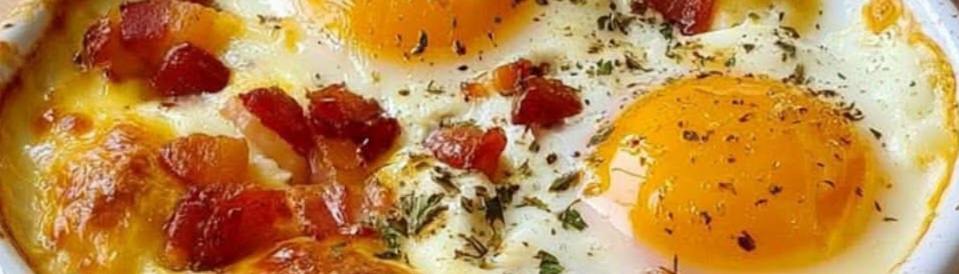
Cufs Cocotte au Chèvre et Lardons
Introduction
Les œufs cocotte au chèvre et aux lardons sont un plat simple, crémeux et réconfortant, idéal pour un brunch, un déjeuner léger ou un dîner rapide. Les œufs cuisent délicatement au four avec de la crème, du fromage de chèvre et des lardons pour obtenir des blancs juste pris et des jaunes encore fondants.
Origin
L’œuf cocotte est une préparation classique de la cuisine française. Le principe consiste à cuire un œuf directement dans un petit ramequin, généralement au bain-marie ou au four. Cette version associe cette technique traditionnelle à des ingrédients très appréciés dans la cuisine française : chèvre, lardons et crème.
Cultural Significance
Les œufs cocotte représentent parfaitement la cuisine familiale française : peu d’ingrédients, une préparation accessible et un résultat généreux. Le fromage de chèvre apporte une touche rustique et caractéristique, tandis que les lardons ajoutent une saveur fumée et gourmande.
Ingredients Quantity
For 4 servings:
8 eggs
120 g lardons
100 g fresh goat cheese
20 cl heavy cream
1 small shallot, finely chopped
1 tablespoon butter
1 tablespoon chopped fresh chives
Salt, to taste
Black pepper, to taste
A pinch of nutmeg
A little grated cheese, optional
Optional Additions
Mushrooms, finely sliced
Spinach
Cherry tomatoes
A few walnuts for crunch
Fresh thyme
A drizzle of honey for a sweet-savory contrast
Smoked paprika for extra flavor
Tips for Success
Do not overcook the eggs; the whites should be set while the yolks remain runny.
Brown the lardons beforehand to remove excess fat and develop their flavor.
Use good-quality fresh goat cheese for a creamier texture.
Avoid adding too much salt because the lardons are already naturally salty.
Cook the ramekins in a bain-marie for especially gentle and even cooking.
Serve immediately while the eggs are hot and creamy.
Instructions
1. Preheat the oven to 180°C (350°F).
2. Brown the lardons in a skillet over medium heat for 4–5 minutes. Drain excess fat and set aside.
3. Lightly butter four individual ramekins.
4. Divide the goat cheese and cooked lardons among the ramekins.
5. Add a spoonful of cream to each ramekin.
6. Carefully crack 2 eggs into each ramekin without breaking the yolks.
7. Season lightly with pepper and a small pinch of nutmeg. Add salt only if necessary.
8. Place the ramekins in a baking dish and pour hot water into the dish until it reaches about halfway up the sides of the ramekins.
9. Bake for approximately 10–15 minutes, depending on how runny you prefer the yolks.
10. Remove carefully from the oven, garnish with chopped chives and serve immediately with toasted bread.
Description
These œufs cocotte are wonderfully creamy and flavorful. The soft eggs blend with melted goat cheese and silky cream, while the crispy lardons provide a delicious savory contrast. Fresh chives add color and a subtle herbal note.
Nutritional Information
Approximate per serving:
Calories: 390 kcal
Protein: 22 g
Fat: 31 g
Carbohydrates: 4 g
Fiber: 0.5 g
Sodium: 650 mg
Values may vary depending on the brands and exact quantities of ingredients used.
Conclusion
Les œufs cocotte au chèvre et aux lardons sont une recette facile, chaleureuse et pleine de caractère. Avec seulement quelques ingrédients, vous pouvez préparer un plat élégant qui convient aussi bien à un repas quotidien qu’à un brunch convivial.
Recommendation
Servez-les immédiatement avec une salade verte croquante et quelques tranches de pain grillé. Pour une présentation encore plus élégante, ajoutez quelques brins de ciboulette fraîche et une petite pincée de poivre noir fraîchement moulu.
Embracing Healthful Indulgence
Pour une version plus équilibrée, réduisez la quantité de lardons et remplacez une partie de la crème par du yaourt nature ou une crème légère. Ajoutez des épinards, des champignons ou des tomates pour augmenter la quantité de légumes. Vous conserverez ainsi le côté gourmand et crémeux du plat tout en apportant davantage de fibres et de micronutriments.